Showing posts with label travel. Show all posts

Tuesday, 25 September 2012

Sri Thanthondreeswarar Temple (Belur, Salem) Tamilnadu

Sri Thanthondreeswarar Temple or Sri Thanthondrieswarar Temple is at Belur in the Indian state of Tamil Nadu.
The temple was built by the Cholas kingdom in the 12th century AD. The main deity is Lord Thanthondreeswarar (Lord Shiva) and the female deity is Goddess Dharmasamvarthini.
Thanthondreeswarar Temple is located on the banks of Vasishta Nadi (Vasishta River). The temple has a serene atmosphere and is surrounded by beautiful hillocks.This temple comes under the Hindu Religious Charitable Endowment Department.
History
The inner sanctum was constructed by 'Milagu Chetty' and the rest were constructed by King Paranthaga Chola (Paranthaka Chola). Construction of Rajagopuram was started during the 12th century by King Paranthaka Chola, but was left incomplete.
It also showcases the Dravidian architecture and is representative of the Chola Empire's Ideology and the Tamil civilisation.
Myth
Manickam Chetty, a pepper merchant was living near a village close to the temple. His job was carrying loads of pepper and selling it in the market place. One day he was crossing this dense forest where the shrine is located at present. As darkness sunk in, he wanted to take rest. In order to eat, he crossed pea aubergine (Sundaikai, an edible vegetable) with a stone. Suddenly he heard a voice saying, "The stone hurts my head. Apply some pepper on my head. Bewildered by this incident, the merchant said that he did not have any pepper and added that he had only Black Gram (Ulundu). Next day he proceeded to the market place and opened his baggage. He was shocked to find black gram instead of pepper. He worshipped God and prayed for His forgiveness. God asked him to bring some mud from the place where he had crushed pea aubergine (sundaikai) and spray it in the baggage containing black gram. He followed His instructions and black gram transformed into pepper again.
On his way back, out of curiosity, he examined the place where he took rest. He was surprised to find a Suyambu Lingam (Lingam which originates by itself from earth).
He worshipped the Lord and it is believed that the inner sanctum of the temple was built by him. Henceforth he was called Milagu Chetty (Milagu means Pepper) and the place where pepper transformed into black gram is called Ulundurpettai. The place has retained its name since then. As per history the inner sanctum was constructed by Milagu chetty and the rest was constructed by king Paranthaga chola.
Rajagopuram
The Rajagopuram is about 97 feet tall having 7 stages(floors). Consecration Ceremony (Kumbabishekam) for the new Rajagopuram was performed on the 24th of February 2002.
Brahmanda Purana
Brahmanda purana is one of the 18 puranas in Sanskrit and is written by the great saint, Vedha Vyasa. In 130th chapter of this purana, Sudamuni narrated the glory of Lord and this temple to his disciples and other saints.
Kanampulla Nayanar
Kanampullar, one of the Nayanmars hailed from a rich family in this same village. He was a sincere devotee of Sri Thanthondreeswarar. He considered lighting lamps in this temple as his prime duty and did it with utmost dedication.
He went through a rough phase and lost all his wealth. Poverty drove him to Thirpuliswaram and he continued lighting lamps in a Shiva temple there. To earn his living, he used to cut a kind of grass called Kanampul and sell it in the market. He spent his meagre income on oil and wicks.
Lord Shiva decided to test his devotion. One day his grass was not sold and he did not have enough money to buy oil and wick to light the lamps. He used his locks of hair as wick in the lamp and lighted it. Extremely pleased with the supreme devotion of Kanampullar, Shiva appeared in front of him and he became one with God.
A statue of Kanampullar holding a lamp can be seen in this temple in front of Pradhosha Nandi (The Devine Bull). He is the 48th among the Nayanmars.
Temple’s Architectural Note
The temple is constructed in such a way that every year, in the first week of Tamil month (Chithirai) the sunlight falls on the main deity in early morning.
A structure of a mythical lion, “YAZHI” (A statue of lion) made out of a single stone with a rolling ball inside its mouth is carved on two pillars.
A structure of Lord Shiva riding a vedhic horse is carved on two other pillars made out of a single stone.
Transportation
Temple is located close to the Belur Bus Terminus (Approx 600 Meter from Bus Terminus).
Bus Route
Belur is 30 km from Salem city and is 6 km to the north of Valappadi, a neighbouring town.
Bus service to Belur is available from neighbouring towns Salem (TOWN BUS NO 82 from old bus stand)salem , Attur & Vazhappady frequently. In addition this, buses from Salem to other places like Karumanthurai, Kariya Kovil, Pappanayakanpatty, Thumbal, Pagudupatu and Arunuthumalai fly via Belur.
Rail Route
Nearest Railway Station is Vazhappady.
Everyday Chennai Salem Express (Train No 1063) starts from Chennai Egmore and arrives at Valzhappady around 5:30 AM.
SOURCE

Tuesday, 4 September 2012

The world's best iconic places to photograph

The Pyramids of Giza, Egypt
One of the premier attractions of Egypt, if not the world, the Pyramids of Giza represent the archetypal pyramid structures of ancient Egyptian civilisation.
These pyramids were built as the final resting place for pharaohs, which were kings of divine right and were seen as living gods. Upon a pharaoh's death he would become a god. Depending on how successful his reign was while he was alive, foretold what power he would have in the afterlife
Venice, Italy
The world's most beautiful city of Venice is said See Venice and die.
Renowned for the beauty of its setting, its architecture and artworks, Venice in its entirety is listed as a World Heritage Site, along with its lagoon. The lagoon is virtually the same as it was six hundred years ago, making it the most photographed part of the city
Stonehenge, England
Stonehenge is in a World Heritage Site of over 2000 hectares that is considered one of the most archaeologicaly rich in Europe. It's home to some of the most important Neolithic and Bronze Age finds and structures in the UK, and contains some 200 scheduled monuments. The most sought after picture is when the sun comes down and the rays of light slip through the upright stones.
Taj Mahal, India
The Taj Mahal is India's most recognised monument and one of the Seven Wonders of the World. The monument is a tomb that contains the body of Mumtaz Mahal -- the wife of Mughal emperor Shah Jahan. He had it built as an ode to his love. It is made of marble and took 22 years and 20,000 workers to complete
Machu Picchu, Peru
One of the most famous and spectacular ruins in the world, Machu Picchu is located 8,000 ft high in the Andes of Peru.
Easter Island
Easter Island is known as one of the world's sacred sites, and it is most famous for its enigmatic giant stone busts, called moai, created by the early Rapanui people. It is one of the most isolated islands on Earth and a World Heritage Site
Ta Prohm Temple, Cambodia
The temple of Angkor Wat, rising out of the Cambodian jungle, is the world's largest religious structure. But nearby is another temple, Ta Prohm, less grand in scale but more penetrating to the psyche. Here the roots of towering strangler figs cascade over the intricately carved stone walls, framing doorways
Petra, Jordan
The fabled "rose red city, half as old as time", is a well known ancient Nabataean city in the south of Jordan. It was recognised as a World Heritage Site by UNESCO in 1985 due to its breathtaking grandeur and fabulous ruins. Although the entry to the monument is expensive (£79 if visiting on a day trip to Jordan), it offers a lot of photo opportunities, making it worthwhile
The Galapagos Islands
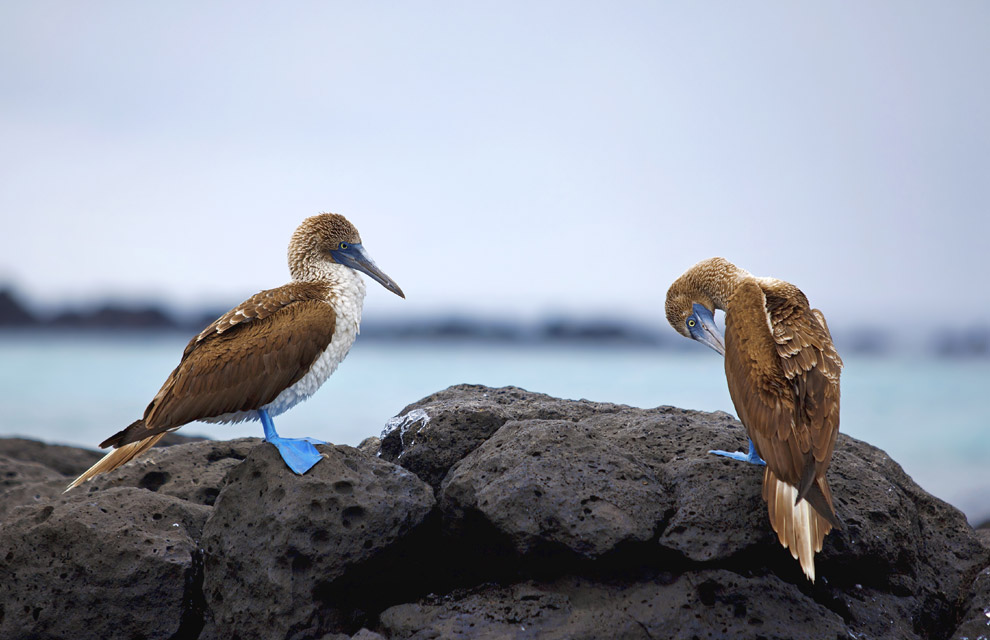
The Galapagos Islands are a small archipelago of islands belonging to Ecuador in the eastern Pacific Ocean. Although the islands are quite remote and isolated they are world-renowned for the unique and fearless wildlife there - much of which was inspiration for Charles Darwin's Theory of Natural Selection. Giant tortoises, sea lions, penguins, marine iguanas and different bird species can all be seen and approached for incredible photographs
Salar de Uyuni, Bolivia
Salar de Uyuni is the world's largest salt flat at 10,582 square kilometers. It was formed as a result of transformations between several prehistoric lakes.
The Kingdom of Bhutan
Tucked away in the Eastern Himalayas, Bhutan is usually visited by people in search of wisdom, inspiration, solitude and happiness. The majesty and grandeur of the natural surroundings makes the experience to this beautiful setting a once in a lifetime experience
Hot Spring, Iceland
A hot spring is produced by the emergence of geothermally heated groundwater from the Earth's crust. Because of both the folklore and the claimed medical value some of these springs have, they are very popular tourist destinations, and locations for rehabilitation clinics for those with disabilities.
Antarctica
The Antarctica is the windiest, coldest and highest continent, but beyond that, it boasts amazing scenery and tremendous and unique wildlife.
Iguazu Falls, Argentina
Situated on the border of Brazil, Paraguay, and Argentina, the Iguazu Falls is one of the great natural wonders of the world. Legend has it that a god planned to marry a beautiful woman named Naipí, who fled with her mortal lover Tarobá in a canoe. In rage, the god sliced the river, creating the waterfalls and condemning the lovers to an eternal fall
SOURCE

Monday, 3 September 2012

Mister B. R. Jindal..An auto driver and a gentleman

He is a hero. In fact, many might think that he is just an urban legend. But worry not, mister B. R. Jindal is very much real. In Delhi, the reputation of auto-rickshaw drivers is terrible, and most commuters have to deal with the frustration of daily fights with rude, unsafe, unfair auto-drivers: to these people, the story we are about to tell might sound like a fairy tale. But we promise - this is all true.
Mister Jindal comes from the Karnal district, in Haryana. When he came to Delhi he first worked as a truck and bus driver, then, about five years ago, bought an auto-rickshaw and started his own business. "Tora hutke", a little difference, was - and still is - his motto. He realised that in a city full with thousands of auto-rickshaws he needed to be special to win against the competitors.
So, while most of his colleagues put their efforts in enhancing their autos with posters of Bollywood characters and powerful music systems, he did something that none had never done before (and none has done after): he focused on making his auto-rickshaw the most passenger-friendly you could possibly imagine.
Behind his meter, mister Jindal has painted in bold "GO BY METER": while the high majority of Delhi auto-drivers will strongly refuse using the fare meter, he will always make it a point to use his. He is a trained driver, he respects traffic rules and is always polite. And while such an unusual behaviour would be enough to make most auto-rickshaw clients believe he is a mirage, this is not what is really special about him.
Mister Jindal's auto, in fact, offers more services than you could possibly think of. Cold drinking water, newspapers, first aid kit, a clock, toffees, toys to entertain kids during the ride and - this is not a joke - a phone. All complimentary, of course. On top of this, there is a 10% discount for senior citizens. No wonder he's a legend.
So, if you are looking for a truly special auto ride, we highly recommend that you give mister Jindal a call. If you're lucky he might be in your area, and happy to come pick you up.
SOURCE

Monday, 13 August 2012

One of the most dangerous road Leh-Manali Highway in himachal

The Leh-Manali Highway is a highway in India connecting Leh and Manali. It crosses some of the highest mountain passes in the world, including , , and Tanglang La (5,325 m), Lachulung La (5,059 m - actually this is a double pass, a few km down road you have to go over another, albeit a bit lower pass), Baralacha La (4,892 m) and Rohtang La (3,978 m) and is open only between June and mid-September when snow is cleared from the road. First two passes are the highest and not the most problematic, as there is very little snowfall in Ladakh. Problematic are the last two passes, nearest to Manali, where weather fronts from the south hit Himalaya and drop huge amounts of snow. And not only that, you can observe how the scenery changes from Ladakh to Himachal Pradesh...
Fortunately we were sleeping in a camp at the Tso Kar lake. That ment, we didn't need to go over the Tanglang La pass, and we had only some 350km still to cover. And wewill do it in one day ;) Incredible was the start. Pitch dark and it didn't seem there was any road... fortunately, after some 10km we found the Leh-Manaly highway. Of course, sleeping was impossible, as the road was... well... if you could call it a road, as sometimes it was better to go offroad. Every pass was incredible and had its own "speciality". There were sooooo many curves, that we stopped counting at 100 :)
This is not the most comfortable drive in the world - spectacular, yes, comfortable, no way. This is not helped by the fact that some of the roads have drops to the side of a good few hundred metres. And yes, you can observe crashed and unlucky vehicles cover with rust down the slope somewhere... And some of the passes are really spectacular, especially if you have to wait on the side of the road for a truck to pass... Its incredible what kind of vehicles are using the road - from tankers and goods lorrys, army trucks to whatever else comes along with a motor in it :))) or without the motor, as some cyclist do... ;)
After 14 hours and half we finally reached Manali. Last pass was... well... foggy. On the north side, it was sunny, on the south side there was... monsoon... And, as Rothang pass is close to Manali, its also popular with tourist who go to the snow line. That ment it was very busy, almost traffic jam on the road. Funnily, at the bottom of the shop there are many "shop" where you can rent coat and winter gear... eh, funny... But Manali was really fine, not too hot and good introduction to monsoon India...
and I cannot stop thinking about the road... gotta go again on this spectacular, albeit dangerous road maybe with a bicycle...
anyway... gotta enjoy again all the hustle and bustle of India... :)))
SOURCE