Showing posts with label politics. Show all posts

Sunday, 2 September 2012

Top pakistani journalist who loves india

Pakistan is going through a very bad these days. Fundamentalist forces in the country plagued by poverty, unemployment, the day the bomb and the general atmosphere of hopelessness in Pakistan. Capture of bin Laden in Pakistan, and the constant drone attacks on U.S. funding cuts have resulted in the whole country Ytimkhane.
Never tell yourself Pakistani community alive today have been divided into castes and religions. If anyone is asked who you are, he is the first Sindhi, Punjabi or Baloch says. Mass exodus of minorities continues. Fake degrees and fake passports (the UK's 'The Sun' newspaper said the sting operation was how to make fake passports in the country), the business also plenty of fruit - flowers. Country other than Pakistan, its starting to feel more threatened.
The major issue of debate in the Pakistani media these days is that Pakistan did after separation from India? Jinnah wanted to make the same country? Foundation of Pakistan, Jinnah secular and debate regarding the restoration of democracy has come to be common. The example of India's progress in these debates again and again is running together with the neighbor is advocated.
Let us know Pakistan, think tanks, journalists and writers about older, who have been called as a traitor to his country as many times as they are siding with India. Click on the photos.
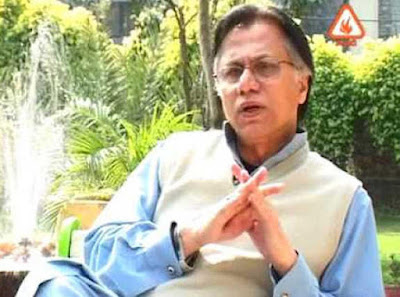
Hassan Nisar Pakistan's senior Colmnist (columnist) and political analyst. The Geo TV show 'crossroads' and I say' appear. Hassan Nisar condition of today's Pakistan responsible for the mistakes made in the past believe they live - in real terms that Mullaiyt and greedy politicians to ruin Pakistan's largest hands, which are interesting to your child abroad are. He says Pakistan has been born on the basis of lies and a good case can not see them in time to come. Hassan Nisar India's upbringing, education and clean image abroad lavishly praises. (To view these programs, you can go on YouTube)
Hamid Mir, who interviewed three of Osama bin Laden in Pakistan are the major journalists who advocate from India friendship. Famous television program Capital Talk, Geo TV anchor Hamid Mir Pervez Musharraf government in 2007 and was banned by the Zardari government in June 2008. Many times over the future of Pakistan and the U.S. policies have tended to dock Mir Pakistan government.
Najam Sethi, chief editor of the Friday Times and Daily Times of Pakistan known journalists who have the courage to strike directly from their own government. Many brave and fearless journalism Sethi International Award is considered the sweepstakes. In 1999 the government caught them on the black deeds probe was put in jail for a month. Send terror in Kashmir, India - Pak Jngon all the guilty, they hold their own land. He has said many times that powerful public forum Pakistan ahead of India did not survive anywhere. (To view these programs, you can go on YouTube)
Imtiaz Alam Pakistan is one of the great journalists of Pakistan Imtiaz Alam, rainy (poverty) admits the biggest enemy of fundamentalism. Quaid-e-Azam Mohammad of Pakistan. Ali Jinnah secular even questioned. They often say that the radicalism of the Muslim community in the dark for thousands of years, while secular country and no country can become Trkkiyafta. He cites the example of India is not tired of this.
Tarek Fatah 'Jew Is Not My Enemy "and" Chasing a Mirage "Tarek Fatah, who has written books such as the famous Pakistani not ever believe her. Fatah was born in Karachi and living in Canada whenever you are asked to Pakistan and why so bitter things. Retorts, he says that I am an Indian, who was born in Pakistan. Prior to 1947, there was no space in this country. Which are derived from the Hindu Vedas I am his child. Tarek says, that unfortunate country Pakistan, who named his arms Mohammad Ghauri, Ghazni and Abdali are named. The Pakistani army has fought no war today. Four days before India surrender to the army, it is not right to be called the army.
Marvi Sirmd Marvi Sirmd the voice of Hindus in Pakistan, which is considered the greatest pain of the fact that Pakistan is not worried about the people in our country are being killed in Kashmir, and is concerned about the Muslims of India. Marvi, Sefma (South Asian Free Media Association), a member of the Indian intelligence agency RAW has been accused of putting money. Marvi fundamental forces of the Indian agent says.
Asma Jahangir Asma Jahangir, the famous human rights activist and lawyer by profession, was a traitor then, when he in front of the TV in the Mumbai attacks, Pakistan had agreed to join the militia. Campaign with the hope of peace in Protestant circles in Pakistan is viewed with skepticism. TV debates are times he fought Ktmullaon hate.
SOURCE

Monday, 27 August 2012

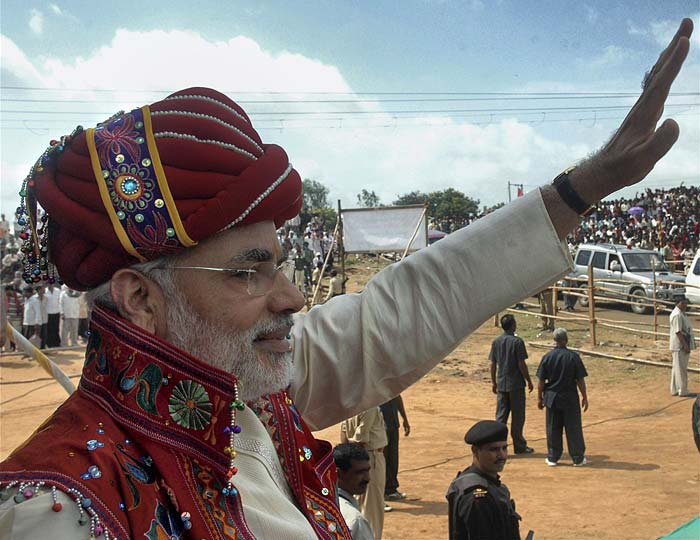
Narendra Modi future Prime Minister of India : Life in Pictures

For a good part of the last decade, Gujarat Chief Minister Narendra Modi has been surrounded in controversy over the post-Godhra riots in 2002. Earlier this week, the Supreme Court ruled that a lower court in Gujarat will now decide whether he should be investigated in a riots case, following which Mr Modi announced a three-day fast to promote "communal harmony” in the state.
Through this photo feature, we take a look at the life of a politician who is seen by many as a future Prime Minister of India.
Born on September 17, 1960 in a middle-class family in Vadnagar, Narendra Modi was active in politics from a very young age. He has been a member of the Rashtriya Swayamsewak Sangh (RSS) since childhood.
Narendra Modi became a part of the Bhartiya Janata Party (BJP), after making a mark in its student wing - the Akhil Bhartiya Vidyarthi Parishad (ABVP).
Narendra Modi started climbing the political ranks quickly once the BJP came to power in Gujarat in 1995. Within the next six years, Mr Modi went on from being the national secretary to the general secretary, and finally in 2001, he was entrusted by his party to take charge as the Chief Minister of Gujarat
Mr Modi's promotion came at a time when the BJP had tasted defeat in the by-elections, resulting in Keshubhai Patel, his predecessor, resigning from office.
Taking over as chief minister could not have come at a tougher time for Mr Modi. Gujarat had witnessed a devastating earthquake earlier that year, and growth was almost non-existent in the state. However, Mr Modi's unique ideas and administrative skills soon got Gujarat back on the road to recovery and progress.
Trouble began for Mr Modi in 2002 after a fire engulfed a train carrying members of a Hindu nationalist organization, killing 59 people on board. Many Hindus blamed Muslims for the fire and began rampaging through Muslim neighborhoods. For weeks, spasmodic and brutal violence continued between Muslims and Hindus. Mr. Modi's critics have blamed him for doing too little to stop violence against Muslims, and in some cases, they allege, even abetting the violence.
Following the riots, opposition parties stalled Parliament and there were calls for Narendra Modi to resign. Mr Modi did resign, but took charge of office once again, shortly after the BJP won the state re-elections, being led by none other than Mr Modi himself.
In 2006, Zakia Jafri, widow of former Congress MP Ehsaan Jafri, who was killed in the Gulbarg Society riot in Ahmedabad, registered her complaint against Mr Modi and 61 others. She accused Mr Modi of colluding to ensure that no help was given to those being attacked in the riots.
In 2008, the Supreme Court issued a notice to the Centre and Gujarat government on Ms Jafri's plea and an amicus curiae was appointed to assist the Court. It then appointed a four-member Special Investigating Team (SIT) headed by former Central Bureau of Investigation (CBI) Director R K Raghavan to conduct investigation in these cases.
The Supreme Court, earlier this month, ruled that it will no longer monitor the case against Mr Modi for the communal riots at Gulbarag Society. The Supreme Court's verdict asks a Gujarat court to decide whether Mr Modi's role in the riots needs to be investigated.
Another controversy that has surrounded Mr Modi is the Ishrat Jehan fake encounter case. In June 2004, Ishrat Jehan, and her boyfriend, Javed were killed by the Gujarat Police. Also shot were Isan Johar and Amjad Ali. The police claimed the four were on their way to assassinate Chief Minister Narendra Modi.
In 2009, metropolitan magistrate SP Tamang who conducted a judicial inquiry into the incident described the death of Ishrat and the others as 'cold-blooded murder'. Mr Tamang's indictment of the Narendra Modi government was severe; he also said senior policemen conspired for "selfish motives."
In 2007, Mr Modi won the elections again, and began his third term as Gujarat's chief minister.
He also holds the record for the longest serving chief minister of the state.
Inspite of the controversies that surround him, Narendra Modi has time and again been recognised as the best Chief Minister in India by many publications. He has single-handedly elevated Gujarat to be known as the most industry-friendly state and a delight for investors. His successful run as chief minister, and now with the Supreme Court ruling that it will not investigate Mr Modi's role in the Gulbarg Society case, he is being seen by many as the frontrunner for the BJP's prime ministerial candidate for the 2014 elections.
SOURCE

Wednesday, 13 June 2012

List of Good Things Muammar Gaddafi Done for The People of Libya

Muammar Gaddafi is dead! Well we all know about that. But some of the good thing you might not know. This is why I am writing this short article to let you know about his contribution to Libya. Yes he was not a good leader , he had many political problems. But still he has done some good work for his country. So, I have decided to share some of his good things. If you are thinking I am a Gaddafi supporter then you are wrong. I am not a Gaddafi supporter , neither I am like other people who are dancing because he is dead. I am just sharing some of the good things of Gaddafi and excluding the bad one. I know most of you are fed off by listening all the bad things about him. Most of the people will argue about these facts but these facts are arguably true.

Muammar Gaddafi's contribution to the people of Libya:
1. All the newly weds people of Libya used to get about 50,000 dollars from Government to lead a very happy life.
2. Home is the basic right of every citizen of Libya.
3. There was no electricity bill in Libiya. Electricity was free in Libya.
4. No interest loan for the people of Libya according to Law. Gaddafi was against interest since interest is forbidden in Islam.
5. Gaddafi has increased the literacy rate from 25% to 83%. Education expenses in Government universities are free in Libya.
6. Medical expenses in Government hospitals was free in Libya.
7. The price of the patrol was 0.14 cents in Libya. Yes we all know Libya has got good petroleum resources. But the price seems to be too low. Isn't it?
8. When Libyan citizen wants to buy a car, Government used to subsidized 50% of the price of the car. 50%? sounds great!
9. A huge bread used to cost only 15 cents in Libya.
10. The GDP per capita of Libya is very high. Over 15,000 us dollars. Purchasing power was very high compare to the GDP.
11. The economy of Libya was improving rapidly. In 2010 it had 10% growth. It has not external debts. It also has the reserves amount of 150+ billion dollars.
12. Unemployment fees were given from the government until the person finds a Job.
13. A Libyan mother used to get 5000 us dollars for giving birth a child.
There were some of the things people of Libya got from the Government of Gaddafi. I hope you have enjoyed reading about these facts, They are all past now. Libyan people are hoping for a better leader. Can they find their true leader? Please do comment and make sure to share the articles to let other know ;).
SOURCE

Saturday, 22 October 2011

Gaddafi - A Life in Pictures


On September 27, 1969, Colonel Muammar Gaddafi overthrew King Idris of Libya in a military putsch. In 1963 Gaddafi formed the Free Officers Movement, a group of revolutionary army officers, which overthrew King Idris of Libya and proclaimed Libya, in the name of "freedom, socialism and unity," Socialist People's Jamahiriya. He was 28 years old.

Gaddafi (right) and Egyptian President Gamal Abdel Nasser in Suez, Egypt. Gaddafi was a great admirer of Nasser.(AP Photo/Farouk Ibrahim)

Gaddafi with Egypt’s President Anwar Sadat (right) in Cairo 1973 entered an agreement to unify Egypt and Libya. (AP Photo)

Colonel Gaddafi with Josip Broz Tito, the authoritarian leader of the erstwhile East European nation of Yugoslavia, in Belgrade. (AP Photo)

Gaddafi addresses the press on November 24, 1973 after meeting French President Georges Pompidou on the steps of the Elysee Palace in Paris. (AP Photo/Dardenas)

Gaddafi with Ugandan dictator Idi Amin (far left) and Algeria’s head of state Houari Boumedienne.(AP Photo)

Gaddafi waves to a crowd as he rides a horse during a ceremony marking the sixth anniversary of the eviction of Italians from Libya. (AP Photo)

Chairman of the Palestine Liberation Organization (PLO) Yasser Arafat, right, raises his hands in a salute to delegates, with Libyan leader Colonel Moammar Gadhafi, center, and PLO leader George Habash, at the Arab Nations Summit in Tripoli, Libya, on Dec. 4, 1977. Habash, whose radical PLO faction gained notoriety after the simultaneous hijackings of four Western airliners in 1970 and the seizure of an Air France flight to Entebbe, Uganda, died Saturday, Jan. 26, 2008 in Jordan. The frequent Arafat rival was 81. ( AP Photo/ Claudio Luffoll).

Safia Gaddafi greets her husband on his arrival at the airport in Belgrade, Yugoslavia, 1973. Gaddafi met Safia Farkash née el-Brasai (right), a former nurse, in 1969 while he was hospitalized with appendicitis during the revolt that brought him to power. (AP Photo/Harry Koundakjian)

Picture taken in Tripoli on December 2, 1997 of Libyan leader Moamar el-Gadhafi and his wife Safiya. (AP Photo/Dimitri Messinis)

Libyan Leader Moammar Gadhafi, making a speech at the opening of the Maghrebin summit in Marrakech Town Hill on Feb. 16, 1989. (AP Photo/Pierre Gleizes)

Colonel Muammar Gaddafi flanked by his female bodyguards, dubbed deridingly by the West as the “Amazonian Guard”.(AP photo/Riccardo De Luca)

Gaddafi and Russian President Vladimir Putin, right, shake hands at the end of a two-day visit in Tripoli, April 17, 2008. Russia said it will write off US$4.5 billion in Libyan debt in exchange for multibillion dollar deals for its firms. (AP Photo/Abdel Magid Al Fergany)

April 21, 2009: Libya’s National Security Adviser Al-Mu'tasim-Billah al-Gaddafi (Gaddafi’s fifth son) in Washington, DC with US Secretary of State Hillary Clinton. He was killed along with his father on October 20, 2011. (AP Photo/J. Scott Applewhite, File)

A portrait depicting Libya's former ruler Moammar Gadhafi is riddled with bullet marks and vandalized with paint on a wall in Tripoli, Libya. (AP Photo/Francois Mori)
SOURCE